

Decision Fatigue: Why Your Brain Is Exhausted by 3PM (and How to Fix It)
Snooze or get up? Blue shirt or black? Email first or Slack? Healthy lunch or takeout? Since your alarm went off, you have been engaged in a high-stakes wrestling match with your own brain. Then, in addition to simple choices, you immediately go to more complex ones. Prioritize the angry client or the long-term project? Change the entire strategy or stay the course? Sign the lease or keep looking for something better?

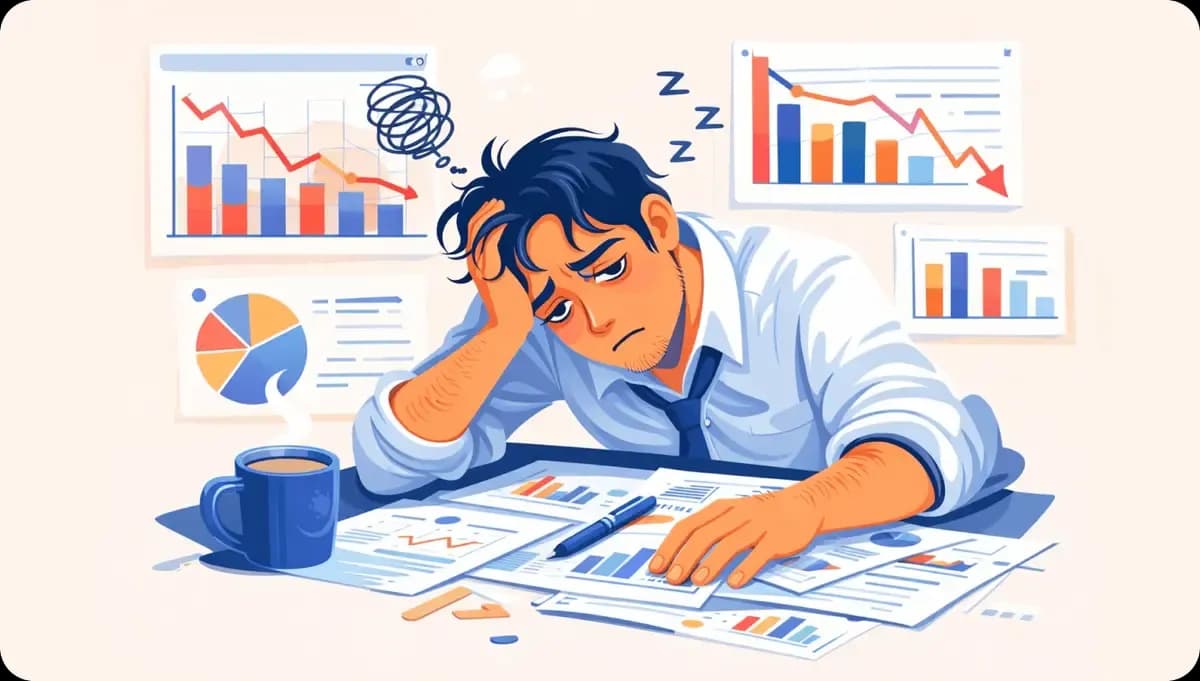
And by the afternoon, you’ve been so stuck in the decision-making marathon, then someone asks you what you want for dinner, your brain flatlines to the point where it’s easier to starve yourself than choose between tacos or sushi.
This phenomenon is real, and has a name – decision fatigue. It’s the specific type of exhaustion that comes from making too many choices in too little time. And today, you’ll learn how to stop it from affecting your daily life.
What Is Decision Fatigue and Why Does It Happen to Smart People
To understand why you crash, you first need to understand the decision fatigue definition. It is not the same as physical exhaustion; you can be physically rested but mentally depleted.
In psychology, this term refers to the deteriorating quality of decisions made by an individual after a long session of decision-making. Think of your willpower and decision-making ability like a muscle. If you flex it all day without a break, it eventually fails.
The concept of decision making fatigue was popularized by social psychologist Roy Baumeister, who demonstrated that willpower is a finite resource. Every time you make a choice, whether it’s a massive strategic pivot or just choosing a pair of socks, you draw from the same limited fuel tank.
The worst part about the choice fatigue is that no one is actually immune to it, which was proven by a famous study by PNAS a couple of years ago.
The researchers analyzed over 1,000 rulings made by parole judges – highly trained experts dedicated to impartiality. You would expect their decisions to be based purely on the facts of the case. Instead, the data revealed a startling pattern – prisoners who appeared early in the morning were granted parole about 65% of the time.
However, as the day wore on and the judges made decision after decision, that rate plummeted. By late afternoon, the chance of getting parole dropped to nearly zero.
And this is decision fatigue psychology in action: the more choices you make, the harder it becomes to make the next one.
Signs You Are Suffering From Decision Burnout Without Knowing It
What many people don’t realize is that the symptoms of decision burnout are rarely physical. You might still have plenty of energy to go for a run, yet you find yourself struggling to choose a playlist. Cause what is decision fatigue? It’s a specific type of cognitive paralysis where the easiest things suddenly become impossible.
So, how can you track the decision fatigue symptoms? See if you can recognize yourself in any of those:
- Decision avoidance. You often find yourself actively hiding from choices. You let calls go to voicemail and leave emails unread just to avoid making a decision.
- Impulsivity. Your brain stops weighing the consequences. Instead of thinking through a purchase or a comment, you act immediately just to get the decision over with.
- Irritability. Psychological studies show that as your mental energy depletes, your ability to regulate emotions drops, making you snap at people for asking simple questions.
- Brain fog. You feel a lack of mental clarity. You might read information or listen to someone speak, but your brain struggles to process the meaning or form an opinion.
- Procrastination. You default to doing nothing. One of the most common decision fatigue examples is staying in a situation that isn’t working (like a bad routine or an unused subscription) simply because changing it requires a decision you are too tired to make.
What Causes the Effects of Fatigue on Decision Making
Knowing the symptoms of decision fatigue is just as important as understanding what exactly causes it. And, unfortunately, there are quite a lot of factors. So, what can make you fall victim to option fatigue?
- Sheer volume. If your life consists of hundreds of micro- and macro-choices, it is only natural to get tired of it. The more decisions you make, the harder it becomes to stay consistent and active.
- Uncertainty and complexity. When you need to make a decision without enough information, you’re more likely to stall and hesitate. The same goes for hard choices – when both options are good or bad, deciding on one is usually way harder.
- Striving for perfectionism. If you try to make the perfect choice every time, you are over-taxing your brain. Seeking the absolute best option requires scanning every possibility, and that is incredibly tiring. In some cases (except the times when your decision has a huge impact on your life, like choosing a partner), going for “good enough” is exactly what you need to preserve your energy.
- Caregiving. People who find themselves in situations where they need to make choices for two often struggle with option fatigue because they spend twice as much energy on making a decision.
The Hidden Cost of Choice Fatigue in Your Daily Life
When you define decision fatigue, it might not sound very threatening. So what if you can’t choose what to have for dinner? You just stick to your partner’s choice, or pick the first random option on the delivery app. Right?
In reality, frequent decision exhaustion can negatively affect different areas of your life without you even realizing it.
- Physical health. When your brain is tired of making decisions, it triggers a biological stress response – and just like that, you’re skipping the gym or ordering fast food simply because you don’t have energy to do anything harder than that. The more often it happens, the more likely you are to create a cycle of lethargy and poor health – all because of the constant decision overload.
- Relationships. If you’re constantly tired of making choices, someone is making them for you – whether your partner, parents, friends, or even colleagues. It might work for some time, but in the long run, consequences can be unpleasant, causing resentment, irritability, and even toxic codependency.
- Finances and budgeting. If you’re not satisfied with your financial situation right now, the reason might not be in making poor financial choices, but in making no choices at all. And yes, when you struggle to decide whether to cancel a subscription or change the insurance plan, it can also be a sign of choice exhaustion.
- Career stagnation. When you stop making any decisions, it affects your career, too. Innovation requires energy and risk assessment. When you are struggling to reduce decision fatigue, your brain defaults to the safe option every single time. You stop playing to win and start playing not to lose, which is the fastest way to become obsolete.
So, is decision fatigue real? Unfortunately, it is. And if you don’t know how to deal with it, it might become a very harmful addition, shaping your day-to-day life.
Proven Ways on How to Reduce Decision Fatigue Immediately
As you can tell from the decision fatigue meaning itself, the core reason for this overload happening is the number of decisions you need to make. So the perfect way to overcome it is by simply reducing that amount – and that can be done in multiple ways.
Why You Should Automate Routine Choices to Avoid Decision Fatigue
The best piece of advice you can remember is that if a decision is made in advance, it costs you zero energy in the moment. So if you can automate some parts of your daily life, it will save you more energy for making other, more important decisions.
- Create a capsule wardrobe and limit your closet to a specific color palette or set of outfits. When everything matches, getting dressed turns into a mechanical action, saving you from the usual “what to wear” struggle.
- The same goes for food – you can look into meal prepping and spend a couple of hours during your time off to prepare your dinners or lunches in advance. If you prefer fresh food, you can replace meal prepping with just making a menu – and sticking to it during the week.
- If you find yourself making the same low-stakes decision repeatedly, like what detergent to buy or what bar to go to during the night out, make a permanent rule of only buying a specific brand or visiting a specific place. You never have to think about it again, and it’s a wonderful option when you think about how to avoid decision fatigue altogether.
How to Beat Decision Fatigue by Front Loading Your Day
If avoiding food or clothes decisions is easy, some choices can’t be automated. So instead of doing that, you can simply reschedule – and make them when your brain is at full capacity.
For that, you need to do some self-reflection to figure out the best time for you. If you’re more active in the morning, eat your “frogs” in the first hours of the day, and if your prime energy levels happen to be during afternoons, that’s exactly when you need to schedule important meetings.
How to Combat Decision Fatigue by Limiting Your Options
Psychologist Sheena Iyengar’s famous Jam Study proved that having too many options leads to paralysis. When shoppers saw 24 jams, only 3% bought one. When they saw only 6 jams, 30% bought one.
So, how to overcome decision fatigue? Just give yourself as few options as possible! And if the situation doesn’t allow it, set a strict time limit for making a choice – this way, your brain abandons perfectionism and focuses on something that is good enough.
Let Attainify Make the Hard Choices for You
You have a finite amount of mental energy every day. And spending that fuel on prioritization leaves you with less power for the actual work.
Attainify serves as an executive function engine designed to protect your brain power.
- Our AI coaches analyze your workload to filter out the noise and identify exactly what moves the needle today.
- Our Action Plans break down overwhelming goals into specific, manageable steps, so you don’t have to wonder what to do next.
FAQ
How to deal with decision fatigue when you are already exhausted?
The ideal option would be to stop making any decisions altogether for a certain amount of time – just to let yourself relax a little bit. But if that’s impossible at that moment, try reducing the options or rescheduling the important choices for the time you have the most energy.
What is the difference between decision fatigue psychology and simple tiredness?
Tiredness is usually both physical and mental exhaustion when you don’t have the energy to do anything. Decision fatigue, on the other hand, is specific to your executive function – you might have plenty of energy to work, but you feel paralyzed when asked to make a choice.
Can decision overload lead to anxiety?
It can, and it often does. When your brain is forced to process too many options, it triggers a stress response. The fear of making the wrong choice creates pressure, and unmade decisions pile up in your mind like open browser tabs, generating a constant background hum of anxiety.



Related Articles




Ready to Transform Your Life?
Take our 1-minute quiz and start your journey to self-discovery and personal growth today.
1-Minute Quiz