

How to Create an Action Plan You’ll Actually Follow
Big goals fail more often because of poor execution rather than from bad ideas. Entrepreneurs, project managers, and ambitious professionals usually don’t struggle with vision. They experience difficulties with follow-through. Even the most groundbreaking idea without a system quickly turns into mental overload and stalled progress. In this guide, we’ll shed light on how to write a business plan step by step that works in real life, not just on paper. You’ll learn how to build a productivity plan that turns complex goals into doable actions. Whether you're launching a company, restructuring a workflow, or mapping out a long-term project, this framework will help you cope with the task more easily.


The Anatomy of an Effective Productivity Plan
An efficient productivity plan is not a to-do list. It is a structured execution system that connects your goals to daily behavior. Without this structure, even the best strategies collapse under pressure.
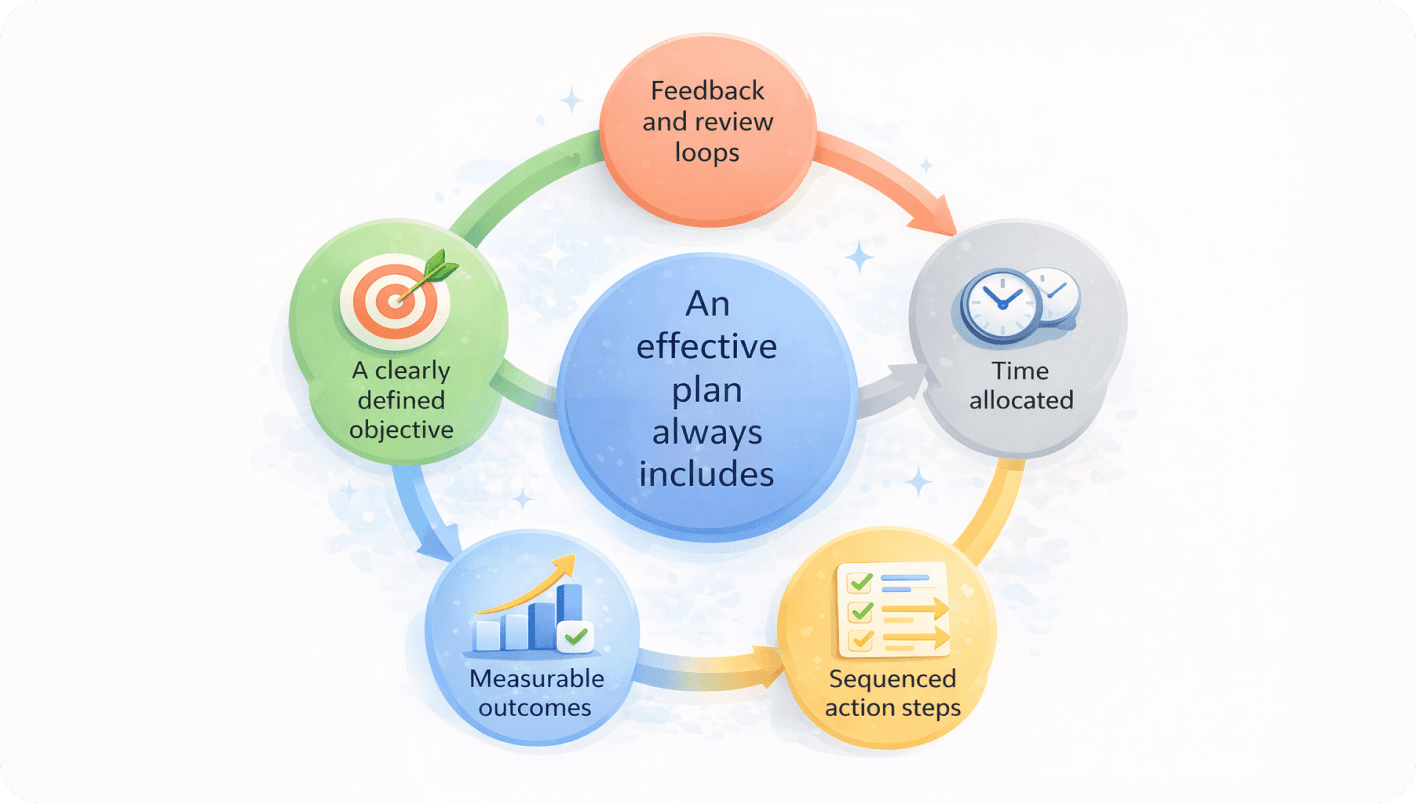
You need to define the destination, map the route, allocate resources, and adjust your steps based on performance. This scheme works for different scenarios. You can fully stick to it when you try to understand how to create a business plan step by step or bring to life personal matters.
A strong productivity improvement plan removes decision fatigue. You no longer ruminate on what you should do today, because the plan guides your direction. This is the foundation of reliable execution.
How to Create a Productivity Improvement Plan: 5 Steps
To create a viable productivity improvement plan, you need to take 5 practical steps:
- Define your priorities clearly
- Determine task complexity
- Allocate time for different processes
- Align resources with possible needs
- Optimize your plan based on the current situation
Execution always follows patterns, no matter whether you are searching for guidelines on how to start a business or how to plan a wedding step by step.
The next five sections break down each step so you can build your plan with precision and speed.
Step 1: Brain Dump & The Art of Prioritization
A successful step by step plan requires mental offloading. Your brain is a powerful “machine” for creating ideas. However, when tasks pile up mentally, clarity disappears, and stress takes over.
So, it is important to start with a full brain dump. You may need to ditch business ideas, open projects, responsibilities, personal goals, and recurring obligations. The goal is to empty your mind completely. This reminds the early planning phase of how to write a business plan step by step guide, where nothing is filtered prematurely.
Once everything is more understandable and visible, apply prioritization using three filters:
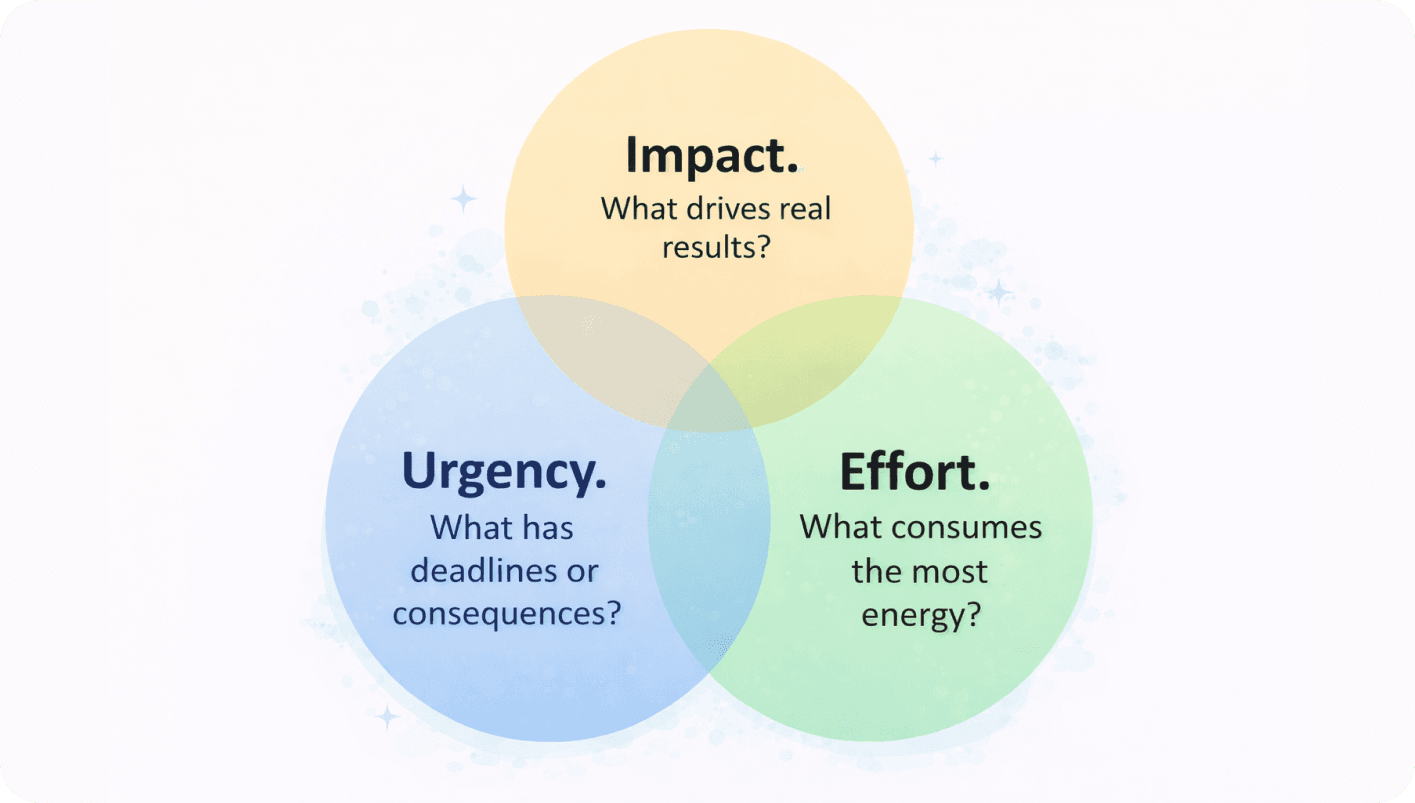
This method prevents overloading your productivity plan with low-value tasks. Prioritization transforms chaos into strategy. Without it, even the most elaborate business plan step by step system can’t survive contact with real life.
Step 2: Breaking Giant Goals into Micro-Steps
Big goals fail because they feel psychologically unreachable. The solution is always decomposition. You never launch with the full system at once. You build it in modules.
Take one large objective and break it into:
- Milestones
- Weekly targets
- Daily micro-actions
For example, instead of writing “Launch a startup,” you can start your action plan with market research, customer interviews, prototype creation, and a test campaign.
Each micro-step should take no more than 30–90 minutes to complete. This keeps momentum high and resistance low.
The same logic applies to different situations whether you are searching for how to plan a wedding step by step guide or guidelines for how to plan a funeral step by step. Large emotional or logistical projects only become manageable when broken into structured parts.
Micro-steps remove fear, and execution becomes mechanical.
Step 3: Scheduling & Time-Blocking
A goal without allocated time for its execution rarely yields the desired results. At this point, you need to turn strategy into action.
Time-blocking means assigning specific hours to specific actions inside your productivity plan. Instead of reacting to the day, you control it.
Key rules for effective scheduling:
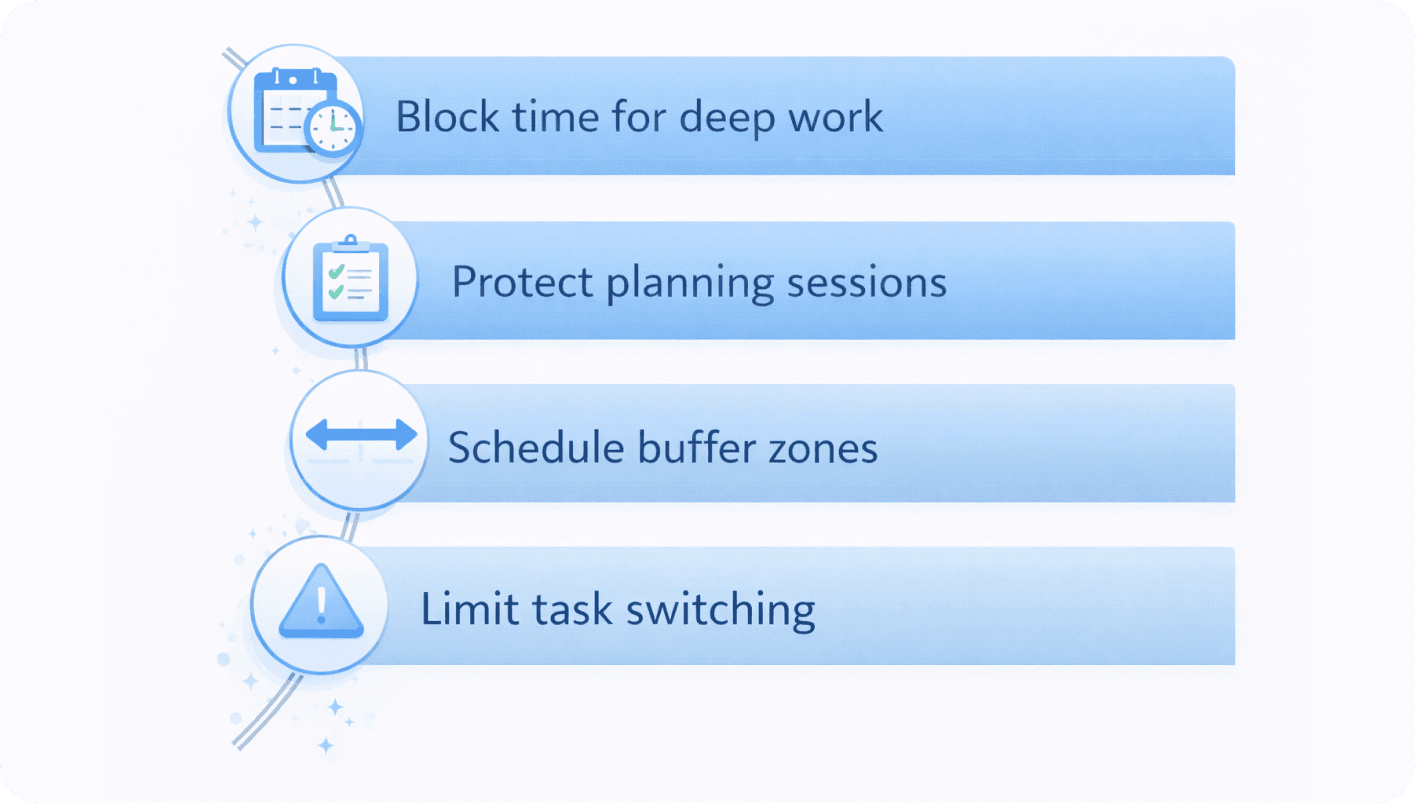
Top performers, who know how to write a business plan step by step, recommend using time-blocking because it creates psychological commitment. According to studies, task switching can reduce productivity by up to 40%. Without scheduling, even the best step-by-step plan stays theoretical.
Step 4: Identifying Resources & Constraints
Every execution system fails when it ignores reality. It is paramount to ensure your plan is buildable.
First, list your resources: time, money, skills, tools, and support systems. Then identify constraints: budget limits, skill gaps, energy capacity, or external dependencies.
This is a fail-safe method to stick to when learning how to make a business plan step by step. You don’t just define goals, but assess their feasibility. Such a simple action can protect you from burnout.
Step 5: The Review Loop (Adaptability)
Plans fail when they become too rigid, so it is paramount to build adaptability into your execution system. Set a recurring weekly review where you analyze what worked and failed, what slowed you down, and what should be changed.
This resembles the feedback systems used in agile project management and exchange migration plan step by step frameworks. Adaptation beats stubborn persistence every time.
Your productivity plan must evolve with new information, changing priorities, and unexpected obstacles. According to studies, organizations that build structured feedback loops outperform those that rely on static planning models. Your review loop turns mistakes into upgrades. This is how a step by step plan stays alive long-term.
The Ultimate Case Study: How to Write a Business Plan Step by Step
Understanding how to write a business plan step by step becomes much easier when you see the full execution flow in action. Let’s walk through a simplified real-world case – a founder launching a digital consulting agency.
Instead of writing a static document, the founder uses a living business plan step by step model. Each section is built as an actionable system tied directly to weekly execution. Thus, he can avoid the typical gap between strategy and real-world action.
This same logic applies whether you're learning how to write a business plan step by step PDF or building a scalable startup roadmap. A business plan only works when it becomes an execution engine.
Phase 1: Market Analysis & Strategy
First of all, you should get a deep market understanding. This phase defines what problem you solve and why your solution matters.
You should laser-focus on:
- Target customer profiles
- Core pain points
- Competitive landscape
- Unique value proposition
The founder conducts direct interviews, studies competitors, and validates demand before moving forward. This prevented wasted resources and false assumptions.
A strong strategy phase ensures your step-by-step plan is grounded in reality. Otherwise, even the best execution system will be ruined by faulty assumptions.
Phase 2: Operational & Financial Planning
Once the strategy is clear, execution mechanics take over. At this point, your plan becomes deeply practical.
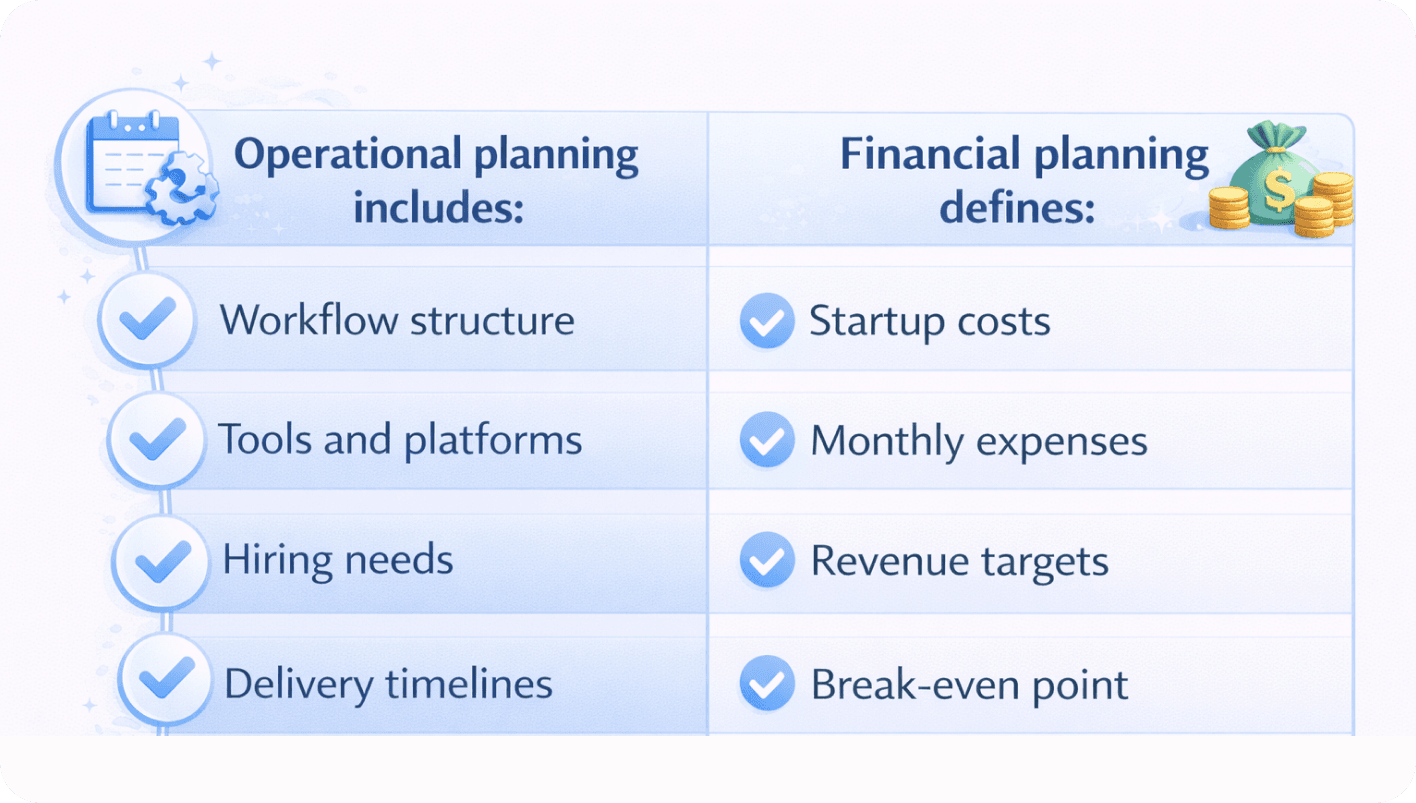
The founder ties each operational milestone directly into their productivity improvement plan, ensuring daily actions support financial sustainability. This phase turns theory into logistics. It also protects entrepreneurs from emotional decision-making by grounding everything in numbers and process.
A business plan only becomes real when operations and finances are aligned with execution capacity.
Phase 3: Formatting & Execution (PDFs vs. Apps)
At the final phase, you should decide where your plan will live. Quite often, founders rely on PDF documents. PDFs are excellent for investor sharing, compliance, and structured presentations. However, they fail at daily execution.
Many entrepreneurs now combine static documents for stakeholders and live digital systems for execution. This is where execution platforms outperform traditional formats. A static PDF doesn’t update dynamically, lacks automation, and doesn’t integrate with daily planning tools.
A true business plan step by step system must live inside your daily workflow. Otherwise, it becomes outdated within weeks. Execution doesn’t happen in documents. It happens in systems.
Why Static Plans Fail & How Attainify Fixes It
Static plans fail because they assume the future will behave predictably. In reality, priorities shift, markets change, and energy fluctuates.
More and more people are refraining from using static plans because they lack:
- real-time progress tracking
- adaptive rescheduling
- behavior-level execution system
- feedback loop
Attainify transforms static plans into living execution systems. Instead of holding your productivity plan in theory, it turns your step by step plan into daily guided execution. Your productivity improvement plan becomes adaptive, personalized, and friction-resistant. This is how long-term consistency is actually built.
FAQ
How to write a business plan step by step for beginners?
No matter whether you learn how to plan a wedding step-by-step or a professional meeting, start by defining a single clear goal and target audience. Then outline your main problems, possible solutions, basic operations, and simple financial estimates. Don’t try to make your first version perfect. Focus on clarity instead. Use a digital tool alongside your draft to turn the plan into a daily execution system.
What are the best action plan for goals examples?
Such examples always include specific tasks, deadlines, success metrics, and accountability systems. For example, instead of “grow a business,” a strong plan defines weekly lead targets, daily outreach actions, and monthly performance reviews. Effective plans also include built-in review loops.
How to plan an event step by step for a large group?
Before you get down to planning an event step by step for a large group, you should define the outcome, budget, and timeline first. Then break execution into venue, logistics, promotion, staffing, and contingency planning. Each area should have clear owners and deadlines. Digital execution tools outperform static checklists for complex multi-team coordination.
How does Attainify help with a productivity improvement plan?
Attainify turns your productivity improvement plan into a real execution environment. Instead of managing tasks manually, you can use the platform, and it will build adaptive workflows, automated reviews, and dynamic scheduling. This reduces decision fatigue and increases follow-through. Besides, you won’t face the gap between planning and real daily behavior.
Sources
- The True Cost of Multi-Tasking.
- The future of feedback: Motivating performance improvement through future-focused feedback.



Related Articles





Ready to Transform Your Life?
Take our 1-minute quiz and start your journey to self-discovery and personal growth today.
1-Minute Quiz