

How to Stop Procrastination Without Relying on Willpower
If you’ve ever promised yourself that you’d try harder tomorrow, but only froze again, you’re not bad or lazy – you’re human. Many people want to figure out how to stop procrastination. Unfortunately, lots of them decide to force motivation or shame themselves into action, but such approaches don’t work.


Is Procrastination a Sign of ADHD or Just Laziness?
This is one of the most debatable questions online: Is procrastination a sign of ADHD or are people simply lazy? The truth is that procrastination and ADHD are deeply connected, but not everyone who procrastinates has ADHD. With ADHD, the problem doesn’t boil down to the lack of desire. People usually experience issues with starting, prioritizing, and regulating attention and emotion. This can lead to ADHD and procrastination cycles where shame makes everything worse.
On the other hand, what we casually call “laziness” is often burnout, anxiety, depression, or cognitive overload. When asking “Does ADHD cause procrastination?”, we miss the bigger picture. Procrastination is usually a nervous system issue, not a character flaw. And that’s exactly why willpower-based advice fails so often.
6 Japanese Techniques to Overcome Laziness & Inaction
There are lots of methods of dealing with procrastination based on psychology, behavior science, and even productivity culture. Still, Japanese techniques have proven to be extremely helpful for overcoming laziness thanks to their gentleness and consistency. Below, we’ll break down 6 of the most practical methods and show how they directly counter overwhelm, burnout, distraction, and motivation paralysis.
Technique 1:
Kaizen (Small Steps) vs. Overwhelm
Kaizen means “continuous improvement through tiny steps.” It targets ADHD procrastination paralysis, where your brain shuts down because the task seems too big.
Instead of asking, “Can I finish this?”, Kaizen asks, “What’s the smallest version of starting?”
Kaizen guidelines strike a chord with so many people because they:
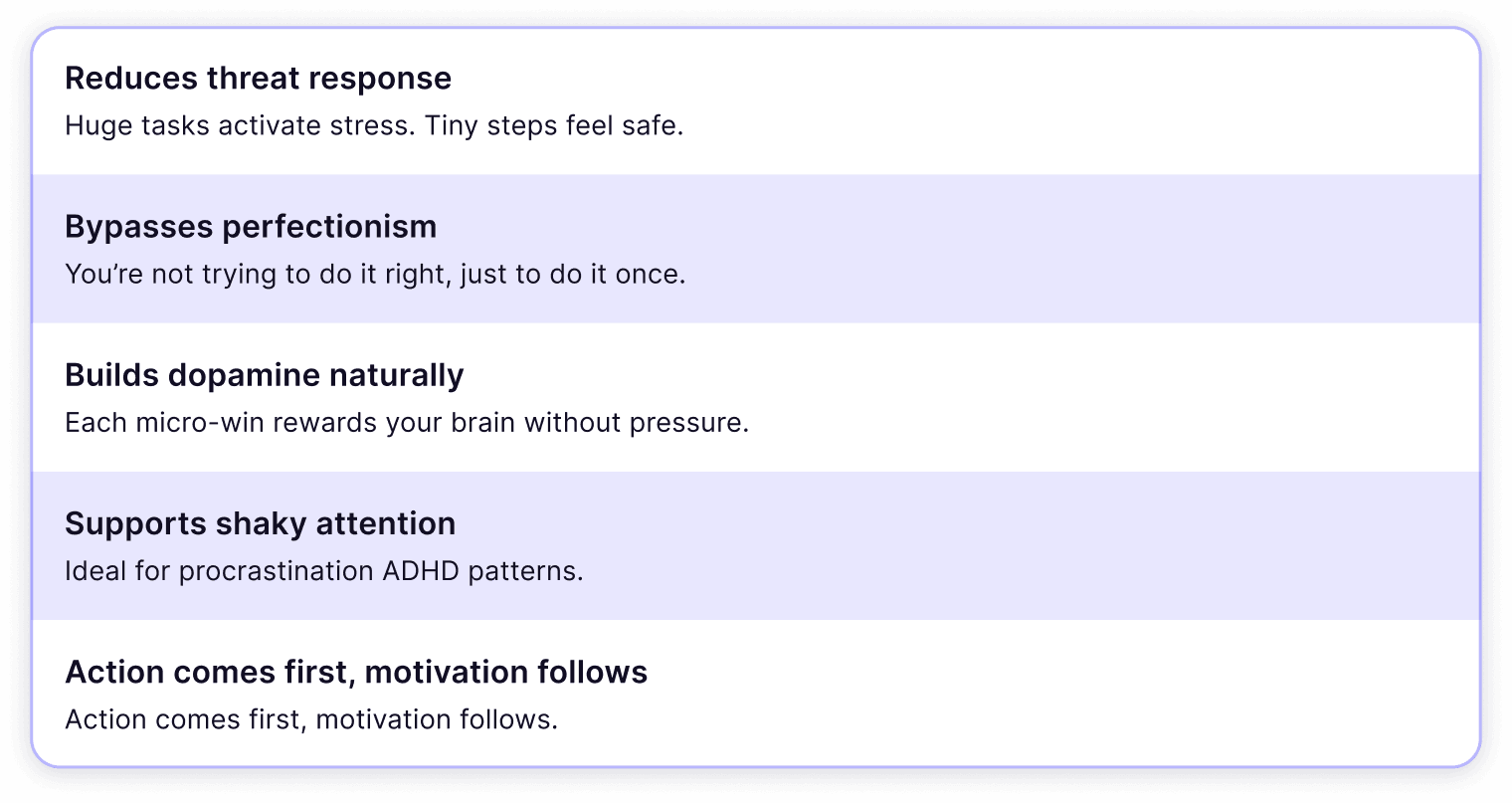
Applying Kaizen in real life is easy. For example, instead of deciding to clean the entire apartment, you can pick up 5 items. The process seems simpler, and you won’t feel reluctant to do it from the start. Or, if you need to write an article, don’t force yourself to write the material in one go. Begin by opening the document and adding 1 paragraph or writing 1 page.
If you’re on the lookout for how to overcome laziness tips that don’t require much energy, Kaizen is one of the most ADHD-friendly tools available.
Technique 2: Ikigai (Purpose) vs. Lack of Motivation
Ikigai is the Japanese concept of “reason for being.” It directly counters emotional emptiness and chronic disengagement that often fuel ADHD and procrastination loops. When your brain can’t connect a task to meaning, it resists hard.
This is why “just do it” fails when the task feels pointless.
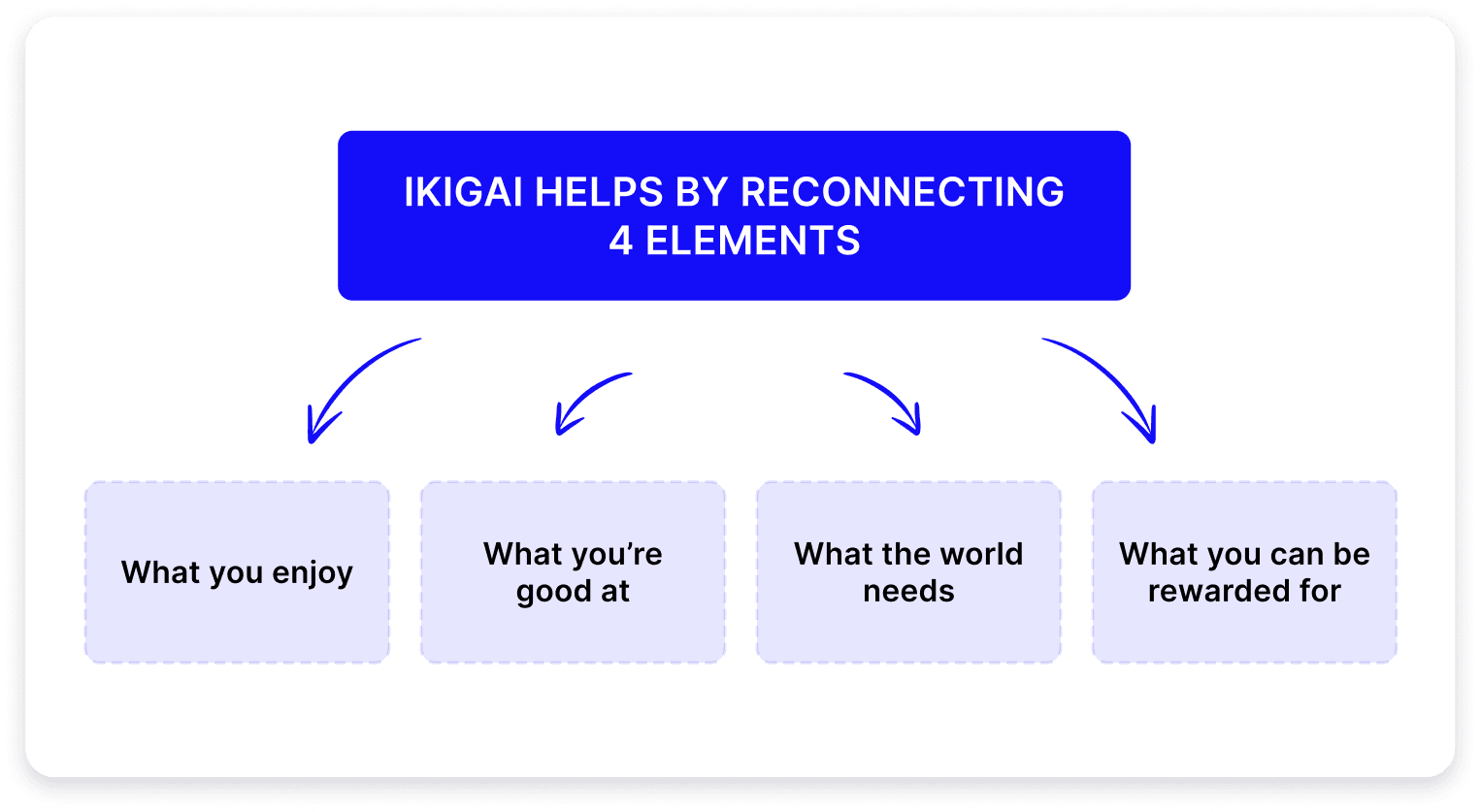
When even one of these elements is missing, motivation drops. When several are missing, finding the answer to how to stop procrastination becomes nearly impossible.
For people stuck in ADHD procrastination, Ikigai reframes effort:
- “Why does this matter to me?”
- “Who benefits if I take one step?”
- “What identity am I building through this?”
Purpose doesn’t need to be dramatic. Even small objectives, e.g., supporting your future self or protecting your health, can restart movement when willpower can’t.
Technique 3: Pomodoro (Timeboxing) vs. Distraction
Pomodoro is a popular system that involves 25 minutes of focused work followed by a short break. It’s one of the most effective tools for managing task avoidance and digital distraction.
Instead of asking your brain to focus “until the task is done,” you only ask it to focus until the timer ends. This is crucial for procrastination and ADHD, where time blindness makes long tasks feel infinite.
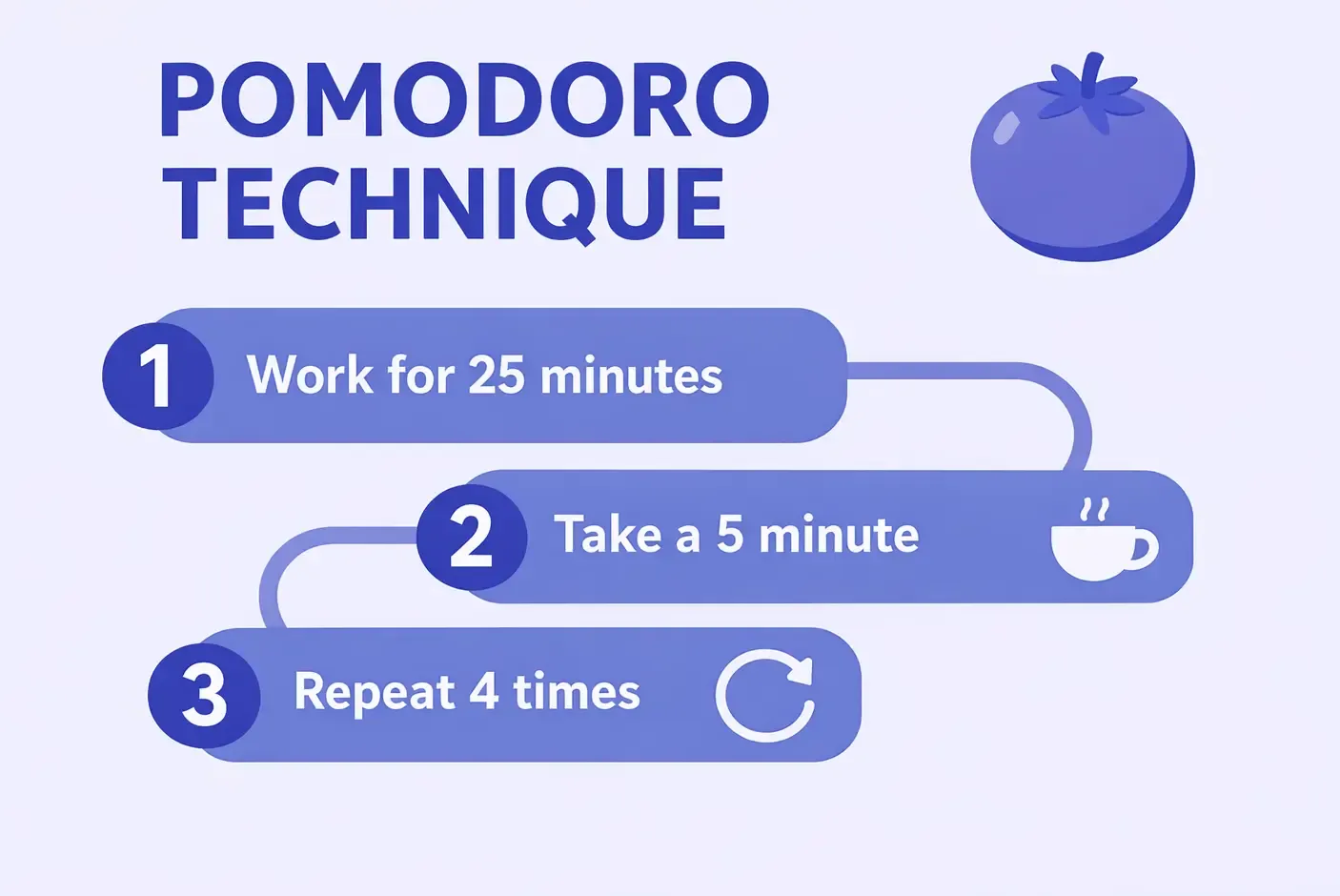
Pomodoro works neurologically when it comes to procrastination ADHD issues because it limits mental fatigue before burnout kicks in, creates urgency without panic, makes starting easier than “finishing”, and resets attention before overload.
Technique 4: Hara Hachi Bu (Energy) vs. Burnout
Hara Hachi Bu means “eat until you’re 80% full,” but its deeper meaning is energy restraint –knowing when to stop before depletion. This principle is powerful for people wondering how to overcome laziness and procrastination cycles if they are driven by burnout.
When you’re constantly exhausted, procrastination isn’t avoidance, but survival. Hara Hachi Bu helps with:
- Chronic fatigue mistaken for laziness
- Emotional overeating + ADHD bedtime procrastination
- Energy crashes that lead to task shutdown
- Guilt-driven overwork followed by total collapse
In practice, Hara Hachi Bu means stopping work before you’re completely drained, leaving 10–20% of your energy in reserve, and ending sessions with “I could continue later,” not “I’m destroyed”.
This technique protects against revenge sleep procrastination ADHD, where your brain delays sleep because it never got enough true rest during the day. Sustainable energy makes consistent action possible.
Technique 5: Wabi-Sabi (Imperfection) vs. Perfectionism
Wabi-Sabi is the Japanese philosophy of accepting imperfection and impermanence. It directly dismantles one of the most common drivers of ADHD procrastination paralysis – perfectionism. When your brain believes that something must be done flawlessly, it often chooses not to do it at all.
Perfectionism is often caused by fear in disguise. Wabi-Sabi neutralizes procrastination ADHD patterns in the following way:
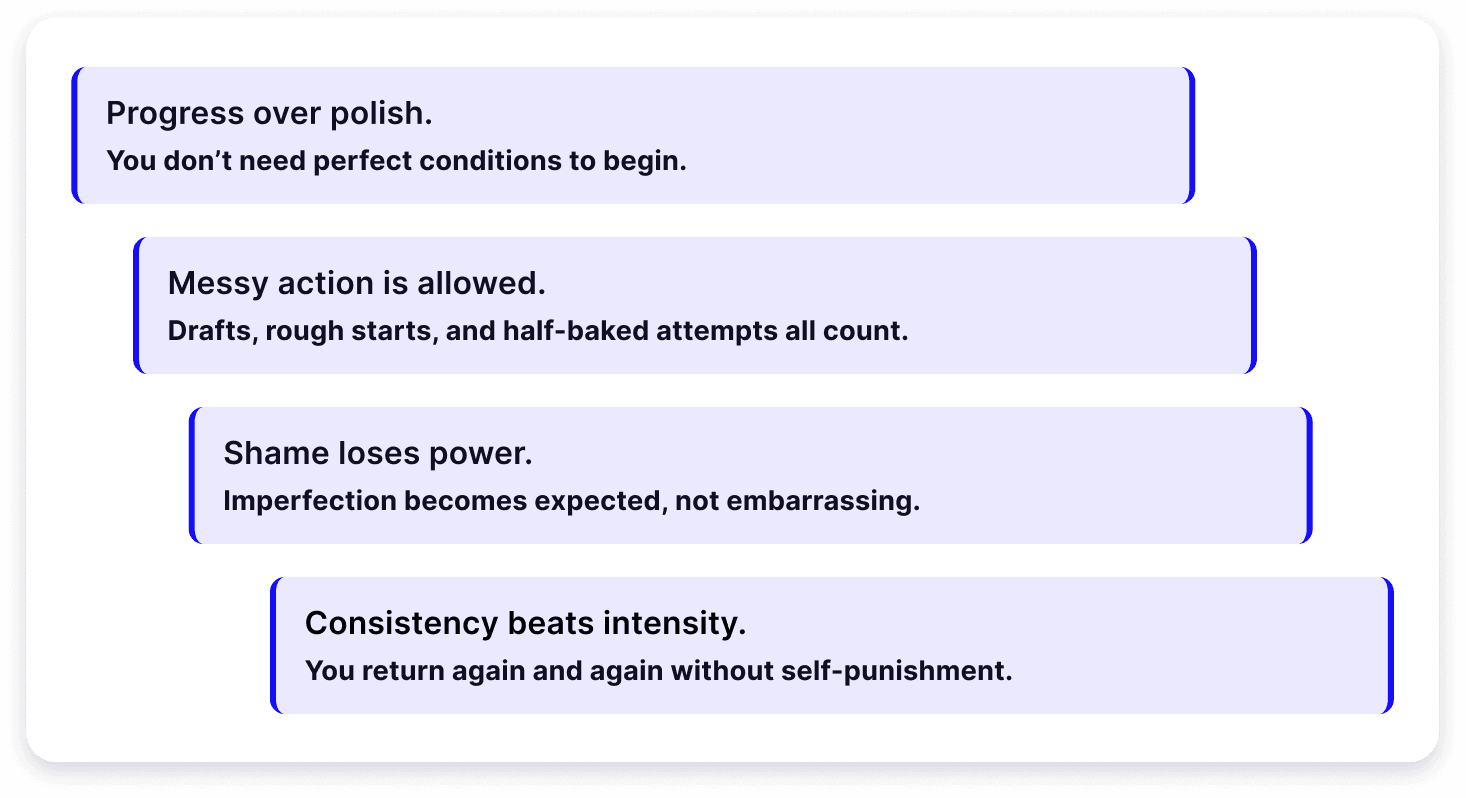
If you’re stuck Googling how to overcome laziness and procrastination, but nothing works for you, perfectionism may be the invisible wall. Wabi-Sabi gives you permission to create badly, move awkwardly, and still move forward. And for ADHD brains, that permission is often the missing key.
Technique 6: Shoshin (Beginner’s Mind) vs. Analysis Paralysis
Shoshin means “beginner’s mind”, when you are approaching tasks without overthinking, assumptions, or pressure to be advanced. It’s the antidote to analysis paralysis, which is a common feature of procrastination and ADHD, where too many options block action completely.
If you adhere to this technique, you will ask “What’s the simplest next step?” instead of traditional “What’s the best possible way to do this?”
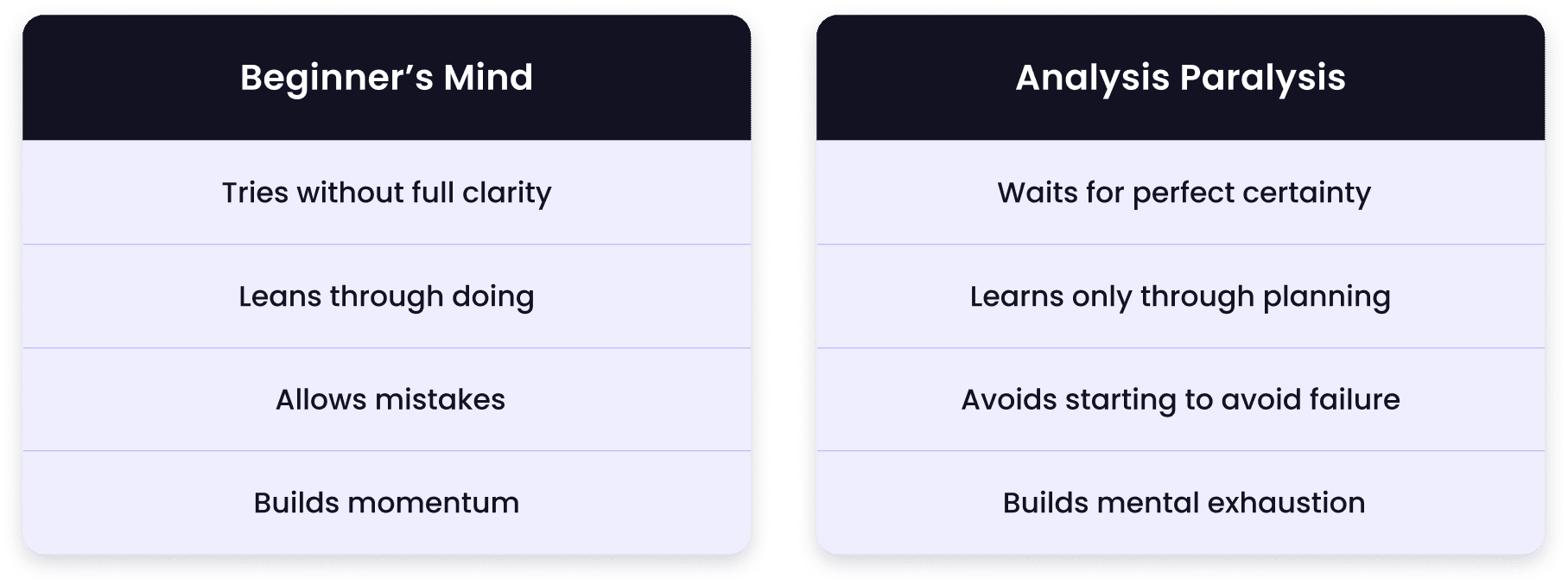
Shoshin is especially helpful for people battling laziness and procrastination, because it removes the unrealistic expectation of instant mastery. You don’t need to be confident to begin. You only need to be curious enough to try.
How to Stop Revenge Bedtime Procrastination ADHD
Revenge bedtime procrastination ADHD happens when your brain delays sleep to reclaim control, pleasure, or freedom after a draining day. It has nothing to do with poor discipline. It’s unmet needs colliding with exhaustion.
To reduce sleep procrastination ADHD without force:
- Give your nervous system real downtime earlier (not just scrolling at night).
- Use Pomodoro-style boundaries to prevent total daytime depletion.
- Lower evening stimulation 60–90 minutes before bed.
- Replace “earned rest” logic with “scheduled rest.”
If you keep searching for how to stop ADHD bedtime procrastination but nothing sticks, it may be because your days are too rigid and your nights are compensating.
Breaking ADHD Procrastination Paralysis with Tech
No wonder overcoming ADHD procrastination paralysis by changing mindset alone isn’t possible. It is solved by external structure. In this cycle, technology becomes a great support system.
The right tools help with time blindness (visual timers or blockers), task initiation (one-click starts and guided flows), overwhelm (auto-prioritization), and dopamine regulation (progress streaks, micro-rewards).
For those navigating ADHD and procrastination, tech works best when it reduces decisions, without adding complexity. You shouldn’t try to get productivity perfection. The main idea is to produce fewer mental barriers between intention and action.
If you’re constantly asking, “Is procrastination a symptom of ADHD?” keep in mind that when structure is built outside your brain, your capacity inside your brain expands.
Environment Design: Practical How to Overcome Laziness Tips
Your environment silently controls your behavior. If your space makes action harder, no amount of motivation will win. So, in addition to the listed Japanese techniques to overcome laziness and procrastination, you should also adjust the space around you
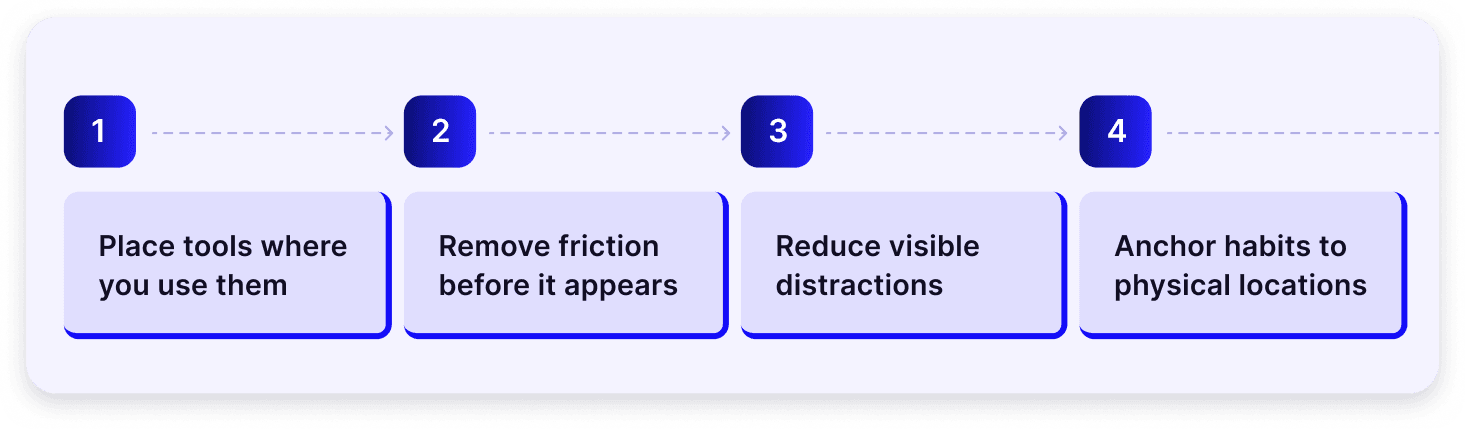
This approach works because it bypasses the question of whether ADHD causes procrastination. Instead of asking your brain to fight resistance, you’re removing resistance at the source.
Stop Fighting Your Brain: Automate Action with Attainify
If willpower keeps failing you, it isn’t your fault. It’s the system you’re trying to operate inside. Attainify is built for people struggling with ADHD procrastination and chronic follow-through issues.
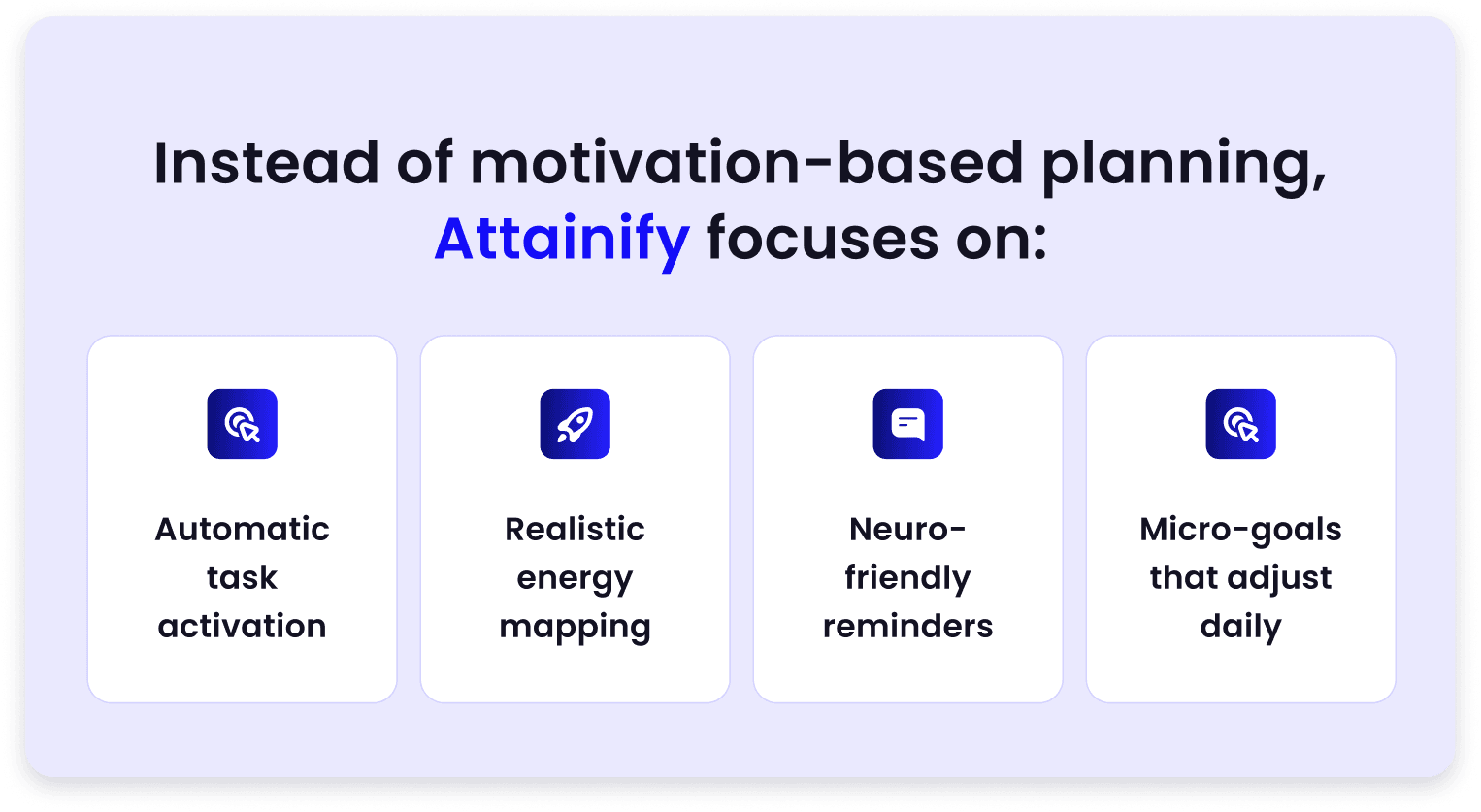
Therefore, you no longer need to decide, re-decide, and self-negotiate. You stop fighting your brain and start working with it.
FAQ
Is procrastination a sign of ADHD?
Whether procrastination is a symptom of ADHD depends on patterns. Chronic difficulty starting tasks, emotional overwhelm, time blindness, and frequent shutdowns are strong indicators. However, not everyone who procrastinates has ADHD. Burnout, anxiety, depression, and nervous system overload can create similar struggles, which is why proper assessment is important.
What are the best Japanese techniques to overcome laziness?
The most effective techniques are Kaizen, Ikigai, Pomodoro, Hara Hachi Bu, Wabi-Sabi, and Shoshin. Instead of relying on motivation, they reshape how your brain experiences effort. If possible, you can combine these methods.
How do I stop revenge bedtime procrastination?
First off, you need to figure out what your nervous system is missing during the day. It can be rest, control, pleasure, or autonomy. Revenge bedtime procrastination ADHD is often your brain’s way of reclaiming freedom after exhaustion. Add real breaks earlier, lower evening stimulation, and create predictable wind-down routines to reduce it. The goal is to stop making nighttime the only safe place for rest.
Can Attainify help with ADHD procrastination paralysis?
Yes, Attainify works perfectly for this task. Instead of depending on motivation, it automates task initiation, simplifies priorities, and adapts goals based on real energy levels. By using it, you can reduce the mental friction that keeps you stuck in freeze mode.
Sources
- Motivation Deficit in ADHD is Associated with Dysfunction of the Dopamine Reward Pathway.
- Assessing the efficacy of the Pomodoro technique in enhancing anatomy lesson retention during study sessions: a scoping review.
- ADHD and sleep: recent advances and future directions.
- Adult ADHD-Related Poor Quality of Life: Investigating the Role of Procrastination.



Related Articles





Ready to Transform Your Life?
Take our 1-minute quiz and start your journey to self-discovery and personal growth today.
1-Minute Quiz