

Procrastination as an Emotional Regulation Problem, Not Laziness
Most advice about procrastination assumes the problem is obvious – you’re not managing your time well enough, so here’s a planner and a productivity technique. And most people who follow that advice end up right back where they started, wondering what’s wrong with them.

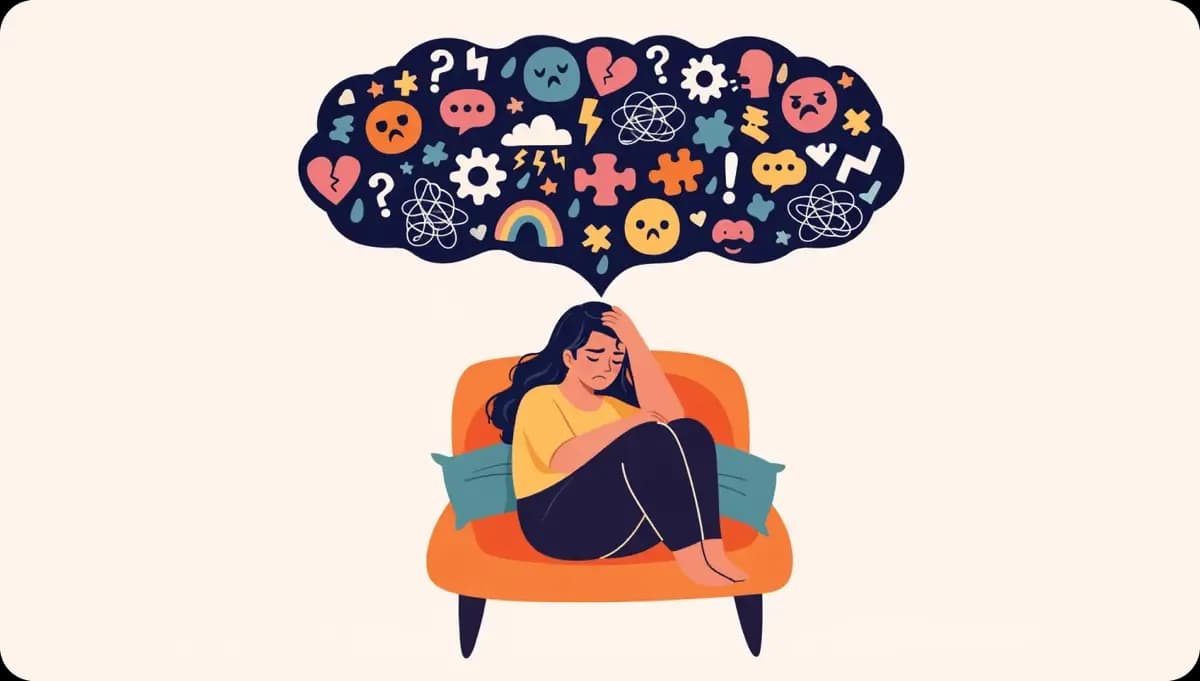
The advice fails because the diagnosis is wrong. Over the past two decades, procrastination psychology has fundamentally shifted. Researchers like Dr. Tim Pychyl at Carleton University and Dr. Fuschia Sirois at Durham University have built a body of evidence showing that procrastination has nothing to do with schedules.
It is a signal of how your brain processes uncomfortable emotions. The moment a task triggers anxiety, boredom, self-doubt, or frustration, our threat-detection system kicks in and pushes toward avoidance – even when rationally, we know that avoidance will make everything worse.
This is the core of procrastination emotional regulation theory, and understanding it changes the entire conversation.
This article covers the full picture: the psychology behind the pattern, the damage that the laziness label causes, the connection between procrastination and depression, ADHD, and anxiety, and the evidence-based strategies that target the emotional root rather than the surface behavior.
Procrastination Definition in Psychology: More Than Just Delay
To truly understand how to fix the problem of chronic avoidance, we first need to look at the exact procrastination definition psychology provides. In everyday conversation, we tend to use this word as a catch-all term for any time a task is not completed immediately.
However, it is incredibly easy to confuse true, destructive procrastination with simply delaying a task because you are busy, strategically prioritizing something else, or taking a much-needed, well-deserved break to prevent burnout.
Clinical psychologists and behavioral researchers draw a very firm, distinct line between strategic delay and true procrastination.
In psychology, procrastination is formally defined as the voluntary, irrational delay of an intended action despite the individual knowing that this delay will likely result in negative consequences, poorer performance, or significant personal distress.
The Clinical Distinction: Strategic Delay vs. Destructive Avoidance
Let’s break down that definition to understand why it matters so much. Not all delay is procrastination.
If you have a report due on Friday, but you choose to spend Wednesday working on an urgent client crisis that just popped up, you are not procrastinating on the report, but engaging in strategic delay. You are reprioritizing based on changing external demands. Similarly, if you are exhausted and decide to go to sleep instead of studying for another hour, knowing that a well-rested brain will perform better on the exam, you are making a rational, self-caring choice.
Procrastination, on the other hand, is inherently irrational. The key phrase in the psychological definition is “despite knowing.” It shows a profound internal conflict between what you know you should do (your rational, long-term intentions) and how you feel right now in the present moment.
You might be fully, painfully even, aware that putting off the task will cause you immense stress tomorrow. And yet, you do it anyway.
This irrationality is why standard productivity advice fails so spectacularly. If procrastination were simply a matter of not knowing how to manage time, a schedule would fix it. But because you are acting against your own better judgment, the root cause lies much deeper than logistics.
The Intention-Action Gap
At the heart of procrastination psychology is a concept known as the intention-action gap. This is the frustrating chasm between deciding to do something and actually initiating the behavior. You set the intention, but when the time comes around, the action does not follow.
Bridging this gap requires emotional energy. When the emotional cost of starting a task feels higher than the perceived immediate reward, the gap widens into a canyon. This is a very common point of friction, and if you find yourself staring at tasks completely unable to cross this gap, you are likely dealing with deep-seated emotional resistance.
Understanding what to do when you can’t get started on anything requires acknowledging that this gap is an emotional barrier, not a physical or intellectual one. You are failing to start because your brain is actively hitting the brakes to protect you from an anticipated negative feeling.
What Does Procrastination Look Like in the Brain?
To figure out what procrastination does on a psychological and neurological level, we have to look inside the brain. Procrastination is essentially a systemic breakdown in self-regulation. It is a biological battle between two distinct parts of your brain: the limbic system and the prefrontal cortex.
- The limbic system is one of the oldest, most primal parts of the human brain. It is fast, automatic, and entirely emotion-driven. It is the center of our fight-or-flight response, and its primary directive is simple – seek immediate pleasure, avoid immediate pain, and ensure immediate survival. It doesn’t care about your five-year career plan or your credit score, it only cares about how you feel right this very second.
- The prefrontal cortex is the evolutionary newer part of the brain, located right behind your forehead. Treat it as the CEO of your brain. It handles executive functioning, logical reasoning, planning for the future, impulse control, and pursuing long-term goals. It is the part of you that wants to save money for retirement, eat vegetables, and finish projects ahead of schedule.
Unlike the limbic system, which operates automatically, the prefrontal cortex requires conscious effort and energy to function. When you are well-rested, calm, and feeling secure, your prefrontal cortex is in charge. But when a task triggers stress, fear, or profound boredom, your limbic system perceives that negative emotion as a literal threat to your well-being.
This is when the amygdala hijack occurs. The limbic system overpowers the prefrontal cortex. It demands that you escape the source of the discomfort immediately. As a result, you abandon the spreadsheet and open TikTok. The limbic system wins the battle for the present moment, sacrificing the future in the process.
The Role of Task Aversiveness
A massive misconception about what causes procrastination is the belief that people avoid tasks simply because those tasks are hard or require too much physical effort. However, research shows it is actually about task aversiveness – the specific negative feelings attached to that task.
Common emotional triggers that increase it include:
- Frustration. The task is tedious, poorly defined, or lacks clear instructions.
- Resentment. You feel forced to do something unfair, or you lack autonomy over the project.
- Boredom. The task is severely under-stimulating and feels totally meaningless to your personal values.
- Insecurity and fear of failure. This is arguably the most powerful trigger. If a task challenges your self-worth, starting it is terrifying.
If you are a high achiever, your procrastination is very likely tied to perfectionism or feelings of inadequacy. If you believe your work must be absolutely flawless to be acceptable, initiating the task becomes a massive psychological risk. Every word you type is an opportunity to fail. In these instances, procrastination is highly intertwined with feeling like a fraud.
When the fear of failure is paralyzing you, procrastination acts as a defense mechanism – if you never start, or if you wait until the last possible second, you have a built-in excuse for why the work wasn’t perfect. You can say, “I just didn’t have enough time,” rather than facing the terrifying thought that “I gave it my all, and it still wasn’t good enough.”
Understanding that procrastination is an irrational, emotionally driven avoidance tactic rather than a simple delay is the foundational first step to actually getting rid of the habit.
The Laziness Myth: Why We Get It Wrong
If you completely remove the scientific explanations and look at how society talks about productivity, you will inevitably encounter the laziness myth. This is the pervasive, deeply rooted cultural belief that if you are not actively working, producing, or achieving, you are simply choosing to be idle because you lack moral fiber.
The word “lazy” implies a deliberate lack of desire. It suggests apathy and paints a picture of someone who simply does not care about the outcome of their life or their work, and who actively prefers doing nothing over doing something somewhat productive.
However, if you actually sit down and talk to chronic procrastinators, you will find that apathy is the absolute last thing they are experiencing. In reality, they are usually deeply invested in the outcome of their work. They care a lot about the outcome of their actions, and this intense caring and the terrifying pressure that accompanies it is exactly what causes them to shut down.
Laziness is Comfortable; Procrastination is Agonizing
The easiest way to break the laziness myth is to look at the internal emotional state of the person in question. When a truly lazy person chooses not to do a task, they are generally really content with their decision. They are sitting on the couch, watching a movie, and enjoying their downtime without a second thought. There is an absence of internal conflict.
When a procrastinator is sitting on that exact same couch, engaging in the exact same activity, their internal experience is entirely different. Their brains are full of a constant, low-grade hum of anxiety. These people might watch TikTok while mentally calculating how much time they have left.
In addition to anxiety, they are also experiencing intense guilt, self-loathing, and dread. They are actively suffering while they are supposedly "taking a break." So it’s not laziness in any shape or form – this is an active, debilitating state of psychological stress.
Often, what looks from the outside like laziness is actually an intense neurological freeze response. You become so overwhelmed by the sheer volume of a task, or the immense pressure to perform it perfectly, that your brain hits the emergency stop button.
This phenomenon is also known as task paralysis. When you are paralyzed, your executive functioning essentially goes offline. When in this state, your brain is actively preventing you from starting because it perceives the task as a huge threat to your emotional stability.
The Destructive Nature of the “Just Do It” Mentality
Why does getting this diagnosis wrong matter so much? Because a misdiagnosis inevitably leads to the wrong treatment plan.
If you believe the problem is laziness, the logical solution is to simply try harder. But usually, this approach completely backfires.
Shame is a profoundly negative emotion. And since we’ve already established that procrastination is driven by a desire to escape negative emotions, adding shame to the mix only pours gasoline on the fire.
The worse you feel about yourself, the more desperately your brain will want to avoid the task to seek immediate comfort. You enter a vicious shame spiral – you procrastinate, feel guilty about it, that guilt makes you feel worse, so you procrastinate more to escape the guilt. Breaking this cycle requires abandoning the laziness myth entirely and looking at the true emotional drivers.
What Causes Procrastination? The Emotional Regulation Connection
If a lack of willpower, poor time management, and laziness are not to blame, then what causes procrastination? The definitive answer is that it is fundamentally an issue of emotional dysregulation. We procrastinate to achieve short-term mood repair.
When we ask about the core reasons for procrastination, we have to look at how humans process discomfort. At its evolutionary core, the human brain is designed to avoid pain and seek pleasure. This survival mechanism kept our ancestors alive, but it wreaks havoc on our modern, goal-oriented lives.
The Mechanism of Short-Term Mood Repair
Imagine you are sitting down to write a complex financial report. The moment you open the spreadsheet, a wave of negative emotions hits you. You might feel bored because of the dry data, anxious because you don’t fully understand the requirements, or insecure because you are worried your boss will find an error.
And while you’re experiencing all that, your brain registers these negative emotions as a form of psychological pain. Your amygdala, the brain’s threat-detection center, raises an alarm. And this is the exact moment where the procrastination emotional regulation connection takes over. Your brain demands a coping mechanism to fix your bad mood.
The Instant Relief Trap and Dopamine
By avoiding the task and switching to something pleasant or even just mindless, like scrolling through social media, organizing your digital desktop, or suddenly deciding you need to vacuum the entire house, you grant your brain immediate relief. You successfully escape the psychological pain of the spreadsheet.
When you make this switch, your brain rewards you. Your amygdala calms down, the threat level drops, and you get a small but potent hit of dopamine. For a brief, fleeting window of time, you feel genuinely better.
This immediate relief is the true driver of procrasination. It is a highly addictive behavioral loop. You are training your brain that the fastest, most effective way to soothe distress is to run away from hard things.
You are prioritizing the management of your current negative mood over the success of your future goals. As researchers put it, you are choosing short-term mood repair at the direct expense of long-term objective pursuit.
Understanding this mechanism is incredibly liberating. It proves that you do not need more discipline, just better emotional management tools. If you can learn to process the anxiety without running away from it, you win the battle. This is the core philosophy behind learning how to stop procrastination without relying on willpower.
In What Ways is Procrastination a Negative Form of Coping?
Once we accept that procrastination is an attempt to regulate our emotions, a critical question appears next: in what ways is procrastination a negative form of coping? If it successfully lowers our anxiety in the moment, why is it considered a psychological problem?
In psychology, coping mechanisms are generally divided into two categories: adaptive (healthy) and maladaptive (unhealthy). Procrastination is a very prominent part of the maladaptive category. Specifically, it is a form of avoidance coping.
While avoidance coping feels deeply soothing in the short term, it is a negative form of coping because it ultimately creates far more distress than it resolves. It is the emotional equivalent of taking out a payday loan with a 500% interest rate to pay off a small credit card bill. You get immediate cash in your pocket today, but you are guaranteeing a catastrophic financial crisis tomorrow.
The Compounding Interest of Negative Emotions
This avoidance cycle perfectly illustrates why is procrastination bad. When you walk away from the stressful task to watch a YouTube video, the task does not disappear. And when you finally are forced to confront the task again – usually when the fear of the looming deadline finally overrides the fear of the task itself – the original negative emotions are still there, waiting for you. But now, they have multiplied.
If you were anxious about writing the report before, you are now anxious about the report plus you are panicking because you only have three hours left plus you are experiencing intense self-loathing because you wasted the entire weekend. Instead of solving the stress, the avoidance actually multiplied it.
The Erosion of Distress Tolerance
Furthermore, relying on procrastination as your primary coping mechanism slowly erodes a vital psychological skill known as distress tolerance – which, basically, is your ability to withstand negative emotional states without falling apart or needing to immediately escape.
Life is inherently full of boring, frustrating, and anxiety-inducing tasks. When you habitually procrastinate, you are teaching your brain that you are fundamentally incapable of handling discomfort, because your emotional resilience drops. The more you avoid, the more sensitive you become to stress. Tasks that used to cause mild annoyance suddenly trigger massive anxiety attacks, simply because your brain has forgotten how to sit with discomfort and push through it.
Procrastination is a negative form of coping because it is a lie we tell ourselves. It is the false promise that we will feel more like doing it tomorrow. In reality, tomorrow never comes with a sudden burst of motivation. But it does come with less time, more panic, and the exact same emotional hurdles you are refusing to jump today.
The Effects of Procrastination on Mental Health and Life Goals
When we view task avoidance through the narrow, outdated lens of simple time management, the consequences seem very logistical. We think the worst outcome is a missed deadline, a late fee on a bill, an angry email from a manager, or a crammed, sleepless night before a final exam.
However, when we correctly identify this behavior as a complex emotional regulation problem, the true effects of procrastination come into sharp focus. The damage deeply and pervasively infiltrates your mental health, physical well-being, and even your life trajectory.
The Hidden Costs of Chronic Avoidance and Constant Stress
The most immediate psychological effect of procrastination is the generation of chronic, low-grade stress. As discussed in previous sections, procrastinators do not actually relax when they are avoiding work. The task remains an open loop in the brain, constantly demanding background processing power.
Because you are highly aware that you should be working, your body remains in a heightened state of physiological arousal, which means that your nervous system is constantly flooded with stress hormones like cortisol and adrenaline.
You live in a sustained fight or flight mode, even when you are just sitting on the couch scrolling through your phone. Over months and years, this constant bath of stress hormones completely exhausts your central nervous system, leading to severe burnout, chronic fatigue, and a significantly reduced capacity to handle even minor daily annoyances.
The Dangerous Link Between Procrastination and Depression
Perhaps the most devastating psychological consequence is the well-documented, bidirectional link between procrastination and depression.
On one hand, procrastination can be a primary symptom of depressive disorders. When a person is clinically depressed, they experience a profound lack of energy, extreme executive dysfunction, and anhedonia (the inability to feel pleasure or find meaning in activities). Under these conditions, initiating any task feels like moving mountains.
However, on the other hand, chronic procrastination can actively cause depressive symptoms. Think about the internal narrative of a chronic procrastinator. It is a relentless, punishing loop of self-reproach. When you continuously set goals and fail to meet them because of avoidance, your self-trust shatters. You begin to view yourself as unreliable, incompetent, and fundamentally flawed.
This repeated failure to follow through on your own intentions breeds a strong sense of helplessness. You start to believe that you have no control over your own actions or your own future. And this is a core psychological driver of depression.
The guilt morphs into deep shame, the stress morphs into despair, and the belief thatyou are “just lazy” turns into the belief that you’re “simply worthless.” Breaking this cycle requires massive, radical self-compassion, not stricter deadlines.
The Physical Toll: How Avoidance Manifests in the Body
The effects of procrastination also don’t stop at the boundary of your mind. The mind-body connection ensures that chronic psychological stress inevitably turns into physical deterioration.
Because the body is constantly managing the physiological fallout of last-minute panic and chronic guilt, procrastinators can be significantly more prone to illness. Studies have linked chronic procrastination to:
- Weakened immune function. The constant increase of cortisol suppresses the immune system, making procrastinators more susceptible to colds, flu, and infections, particularly right after a major deadline has passed (the let-down effect).
- Cardiovascular issues. The frequent spikes in blood pressure and heart rate associated with panic-driven, last-minute work put immense strain on the heart, increasing the long-term risk of hypertension and cardiovascular disease.
- Gastrointestinal distress. Believe it or not, but the gut is also highly sensitive to stress. Procrastinators frequently report higher instances of stress-induced digestive issues, nausea, and irritable bowel syndrome (IBS).
- Severe sleep disruption. It is incredibly difficult to achieve deep, restorative sleep when your brain is violently punishing you for the things you didn’t do that day. Procrastination frequently leads to so-called revenge bedtime procrastination – staying up late engaging in mindless activities to reclaim the personal time you feel you lost to stress during the day.
The Stagnation of Life Goals and Ambition
Beyond mental and physical health, the ultimate tragedy of emotional procrastination is the stagnation of your life goals. When you are constantly caught in the cycle of avoidance and panic, you are permanently stuck in survival mode.
And when all your emotional energy is spent surviving the stress of delayed tasks, you have zero cognitive bandwidth left for growth mode, where you pursue long-term, proactive goals.
These goals don’t have external, immediate deadlines. Therefore, if you rely on the panic of a deadline to force you into action, you will never accomplish these long-term dreams. Procrastination silently steals your future by keeping you indefinitely trapped in the panic of the present.
How to Overcome Emotional Procrastination (The Attainify Approach)
If procrastination is an emotional regulation problem, it is entirely illogical to try and solve it with a new time management app, a color-coded calendar, or the Pomodoro technique. These tools are fantastic for organizing work once you are already capable of starting. But if you are emotionally paralyzed, a perfectly color-coded schedule will just sit on your desk, mocking you.
To actually solve the problem, you must shift our paradigm entirely. You need to stop trying to manage your time and start actively managing your emotions. This is the foundation of the Attainify approach to overcoming chronic avoidance.
Step 1: Label the Underlying Emotion (Affect Labeling)
The very first step to breaking the cycle is interrupting the automatic fight or fligh response triggered by the aversive task. You cannot fix a problem you refuse to look at.
The next time you are sitting at your computer and you feel that sudden, overwhelming urge to open a new tab, check your phone, or walk away – stop.
Hold your position for just ten seconds and turn your attention inward. Ask yourself the most critical question in procrastination psychology:
“What exact, specific emotion am I feeling right now?”
- Are you feeling terrified that your writing isn’t good enough?
- Are you feeling completely overwhelmed because the project has no clear instructions?
- Are you feeling deep resentment because you feel underpaid for this particular job?
- Are you simply incredibly bored?
In neuroscience, the practice of naming your emotion is called affect labeling. Brain imaging studies show that the simple act of putting a name to a negative emotion actively dampens the response of the amygdala and increases activity in the prefrontal cortex.
And if you’re still struggling to figure out the exact emotion you feel, Attainify’s simple quiz will help you solve this problem in seconds. After describing your main problem (in this particular case, procrastination), you’ll see a couple of simple questions that will eventually lead you to the core issue behind the task avoidance.
Step 2: Silence the Internal Punisher
As we established, shame and guilt are the fuel that keeps the procrastination engine running. If you want to stop procrastinating, you have to stop punishing yourself for doing so.
When you identify the negative emotion, your inner critic will immediately try to attack you for feeling it. This negative self-talk instantly spikes your emotional distress, sending you right back into avoidance mode.
That’s why the first thing you need to do is simply learn how to silence your inner critic. You have to replace the voice of the punishing disciplinarian with the voice of a compassionate, objective scientist. Instead of attacking yourself, validate the emotion, because something as simple as validation actually strips the emotion of its power over you.
Step 3: Radically Lower the Bar for Success
Once you have labeled the emotion and neutralized the inner critic, you still have to actually start the task. How do you do that when you are still feeling some residual resistance?
You do it by shrinking the task until it is so microscopically small that your brain no longer perceives it as a threat.
When we procrastinate, we usually have an incredibly inflated, perfectionistic idea of what a good working session looks like. We tell ourselves we need to sit down for four uninterrupted hours, write ten flawless pages, and feel highly motivated the entire time. The brain looks at that massive expectation, panics, and shuts down.
The secret to overcoming emotional resistance is to radically, almost absurdly, lower the bar for success. Your goal is no longer to finish the report. Your goal is to open the Word document and write one single sentence – and that’s it. If you write one sentence and want to stop, you have permission to stop.
Attainify is created to help you break your long-term or short-term goals into simple steps that you can take every day. After describing the thing you want to achieve, you’ll receive a personalized plan that starts with the simplest steps you can take right away.
The Power of the Next Physical Action
When you are emotionally overwhelmed, your brain cannot process abstract concepts like “organize the wardrobe” or “do my taxes.” In that moment, they will feel like massive, multi-step projects.
Instead, you need to translate that overwhelming project into the very next, immediate physical action. What is the actual movement your body needs to make to advance the project by one millimeter?
- Instead of “do my taxes,” the next physical action is “open the top drawer of the desk and pull out the W-2 envelope.”
- Instead of “write the marketing proposal,” the next physical action is “type the title of the proposal at the top of the page.”
By focusing solely on a tiny, non-threatening physical movement, you bypass the emotional roadblock. Once you take that first tiny step, you cross the intention-action gap. The hardest part of any task is overcoming the friction of starting. Once you are in motion, physics (and psychology) dictate that it is much easier to stay in motion. The anxiety drops, the emotional threat dissolves, and you find yourself actually doing something instead of waiting for the best moment to start.
Psychological Strategies for Managing Resistance
Now that we have completely dismantled the laziness myth and established the true reasons for procrastination, we can look at advanced psychological strategies to handle this resistance. If you have spent your life relying on brute-force willpower, these strategies might feel incredibly counterintuitive at first. They do not involve yelling at yourself, punishing yourself, or forcing yourself to sit at a desk for twelve straight hours until you just do it.
Instead, these psychological strategies are entirely centered around friction reduction, emotional intelligence, and fundamentally changing the way you relate to your own distress.
The Counterintuitive Power of Radical Self-Compassion
As we touched on earlier, the most powerful tool in procrastination psychology is arguably self-compassion. This is often a tough pill to swallow for high-achieving, chronically stressed individuals. The prevailing belief is that if you are easy on yourself, you will just lie in bed all day and never accomplish anything. You believe that your harsh inner critic is the only thing keeping your life from falling apart.
However, clinical data proves the exact opposite. A landmark study conducted by Dr. Michael Wohl examined university students who were chronic procrastinators. The researchers looked at how the students felt after they procrastinated on their first midterm exam. They divided the students into two groups: those who severely punished and berated themselves for delaying their studying, and those who practiced self-forgiveness and compassion for their mistake.
When the second midterm rolled around, the results were stunning. The students who forgave themselves for procrastinating on the first exam actually procrastinated significantly less on the second exam. The students who beat themselves up procrastinated just as much, if not more.
Why does this happen? Because of procrastination emotional regulation. When you forgive yourself, you release the heavy burden of shame and guilt. By removing those negative emotions, you remove the primary trigger that causes you to avoid the task in the first place. You lower the task aversiveness.
Practicing self-compassion means speaking to yourself the way you would speak to a respected colleague or a close friend who is struggling. Instead of saying,
“I am a disaster, I wasted another whole day, I’m never going to succeed,”
you say,
“I had a really hard time focusing today because I’m feeling insecure about this project. It makes sense that I wanted to avoid it. Tomorrow is a new opportunity to try again.”
This simple shift in tone de-escalates your nervous system and allows your prefrontal cortex to come back online.
Bridging the Empathy Gap with Your Future Self
One of the most fascinating discoveries in the procrastination definition psychology sphere involves how our brains process time. Philosophically, we know that the you of today and the you of tomorrow are the exact same person. But neurologically, your brain does not see it that way.
This phenomenon is known as time inconsistency or present bias. Functional MRI (fMRI) brain scans have revealed that when human beings think about their present selves, a specific region of the brain lights up. But when they are asked to think about their future selves (the person they will be in a week, a month, or a year), that region powers down. Instead, the brain lights up in the exact same way it does when thinking about a completely random stranger.
This neural disconnect perfectly explains why is procrastination bad and why it feels so easy to do in the moment. When you choose to delay a painful task until Friday, your brain does not register that you will have to deal with the pain on Friday. What it does register instead is that you are dumping a painful, annoying task onto some stranger. And, of course, our brains are perfectly happy to let a stranger deal with the stress if it means we get to watch Netflix right now.
To overcome this, you must actively build empathy for your Future Self. Psychologists call this Episodic Future Thinking. You have to vividly visualize the person you will be tomorrow.
- Close your eyes and picture yourself waking up tomorrow morning.
- Imagine the heavy, sinking feeling in your chest when you realize the deadline is only hours away.
- Visualize the panic, the rushed coffee, the sloppy work, and the intense regret.
Now, look at the task in front of you today not as a burden, but as a profound favor you are doing for that future version of yourself.
Building a System: Implementation Intentions
Motivation is entirely based on emotion, which makes it highly volatile and unreliable. If you wait until you feel like it to do something difficult, you will be waiting forever. You cannot rely on your mood to dictate your actions.
Instead, you need a system that bypasses your emotional state entirely. Vague goals like, working on the project sometime this weekend, are guaranteed triggers for procrastination. They are too broad. And because they lack specific parameters, your brain sees them as massive, overwhelming threats. Every time you think about the resume, your brain says “not right now pal, too tired.”
To short-circuit this, you must learn how to create an action plan you will actually follow using a psychological tool called Implementation Intentions, also known as “If-Then” planning.
Pioneered by psychologist Peter Gollwitzer, this strategy forces you to pre-decide the exact conditions under which you will execute a behavior. It removes the burden of decision-making from the emotional present and places it in the logical past.
The formula is simple: IF [Situation/Time/Place], THEN I will [Specific Action].
- Weak Intention: I need to study for my licensing exam. (Triggers overwhelming anxiety and avoidance).
- Implementation Intention: IF it is 8:00 AM on Saturday, and I have finished my coffee, THEN I will sit at the kitchen table, open chapter three, and read for exactly twenty minutes.
By making the plan hyper-specific, you remove the friction of having to decide what to do and when to do it. When 8:00 AM rolls around on Saturday, you don’t have to check your emotional temperature to see if you feel motivated. The decision has already been made by your prefrontal cortex. You simply execute the “Then” part of the equation.
Designing an Environment to Prevent Avoidance Coping
Finally, we must address the environment. If we know in what ways is procrastination a negative form of coping, we know that we are turning to external distractions (phones, social media, video games, organizing) to soothe our internal distress.
Willpower is weak, but environmental design is strong. If your phone is sitting face-up on your desk while you try to write a difficult essay, you are forcing your brain to actively fight the urge to check it every single second. That constant resistance drains your cognitive battery, leaving you with less energy to actually do the hard work.
You must design an environment where the path of least resistance leads to your work, and the path of highest friction leads to your distractions.
- If you use your phone to procrastinate, put it in a different room, completely powered off, while you work.
- If you open a new tab to read the news when a task gets hard, use a website blocker to lock those sites during your working hours.
- Clear your desk of everything except the one single task you are focusing on right now.
Make it significantly harder to run away from the negative emotion than it is to just sit there and process it.
Summary: Managing Emotions, Not Time
The journey to overcoming chronic avoidance is not a quick fix. It is a profound, fundamental rewiring of how you view yourself and how you process psychological discomfort.
For your entire life, society has handed you a false narrative. You have been told that your inability to start tasks is a symptom of laziness, a lack of drive, or a character flaw. You have punished yourself endlessly, hoping that the sting of shame would somehow transform into the spark of motivation. But as the effects of procrastination have likely shown you, shame is not a catalyst for growth. It is nothing more than a cage.
When we look at the true causes of procrastination, the science is undeniable. Procrastination is an emotional regulation problem. It is the human brain operating exactly as it evolved to operate: desperately trying to protect you from things that make you feel incompetent, anxious, bored, or overwhelmed.
Your brain is simply prioritizing your short-term comfort over your long-term success. The coping mechanism is maladaptive, but the intention behind it – protecting you from pain – is entirely natural.
The Paradigm Shift
To break this lifelong habit, you must embrace a complete paradigm shift:
- Stop managing your time, and start managing your mood. A calendar cannot fix a fear of failure.
- Validate your emotions. When you feel the urge to run away, stop and name the feeling. Accept that it is okay to feel anxious or bored. You do not have to feel good to take action.
- Silence the inner critic. Replace self-punishment with radical self-compassion. Forgive yourself for past delays so you can move forward with a clean slate.
- Shrink the threat. When a task feels too emotionally heavy to bear, break it down until it is almost laughably small. Find the very next physical action, and focus only on that.
- Build empathy for your future self. Stop dumping your emotional distress onto the you of tomorrow.
You are not lazy – just stressed, overwhelmed, and experiencing very real emotional resistance. By treating yourself with the psychological empathy and strategic compassion outlined in this guide, you can finally cross the intention-action gap. When you heal your emotional relationship with your work, the productivity, the focus, and the success will follow naturally.



Related Articles



Ready to Transform Your Life?
Take our 1-minute quiz and start your journey to self-discovery and personal growth today.
1-Minute Quiz